by Henry James
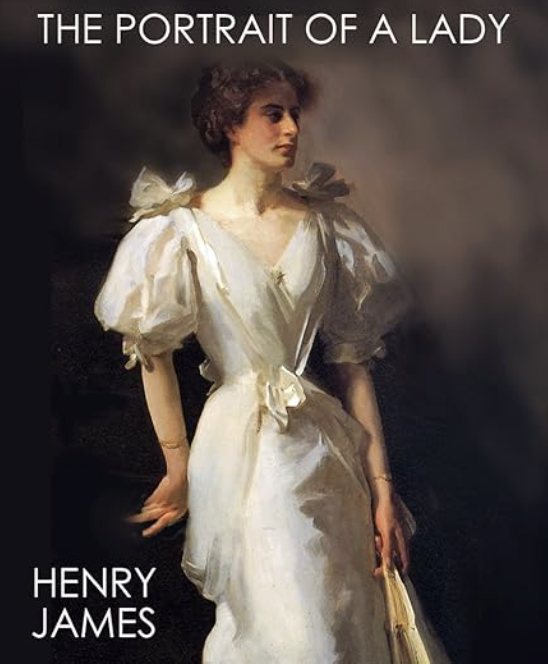
Henry James’s The Portrait of a Lady, first published in one volume in 1882, follows Isabel Archer, a young American woman of idealism and intellect determined to pursue a life of independence and self-discovery despite the constraining social norms of the Victorian era. At a time when women without independent means were expected to secure stability through marriage, Isabel longs for freedom, experience, and choice.
After her father’s death leaves her with little money, she accepts her aunt Mrs. Lydia Touchett’s invitation to London and stays at the idyllic Garden Court estate with Mrs. Touchett’s husband, Daniel, and their son Ralph. Isabel’s Americanness—her freshness, imagination, and sense of possibility—captivates both uncle and cousin. Moved by her spirit, Ralph persuades his dying father to leave Isabel a large inheritance, believing that “money should make her free.” With this fortune, her vision of an autonomous life suddenly becomes attainable.
She rejects marriage even from what looked like suitable candidates, Ralph’s full package friend Lord Warburton, a man with wealth, pedigree, social status and looks. Caspar Goodwood, a boring man in looks and demeanor but solid package with a Harvard education and a successful family cotton factory.
Isabel refuses proposals from seemingly ideal suitors. She turns down Lord Warburton, Ralph’s affluent, well-born friend who offers wealth, status, and genuine affection. She also rejects Caspar Goodwood, steadfast and intense, heir to a successful Boston cotton-mill fortune. When Ralph presses her on why she won’t marry, Isabel responds with youthful conviction: “I don’t want to begin life by marrying. There are other things a woman can do.”
Her path shifts when she meets Madame Merle, Mrs. Touchett’s polished expatriate friend, whose artistic accomplishments and worldly refinement fascinate Isabel. Beneath this cultivated exterior, however, Madame Merle sees opportunity in Isabel’s inheritance. She later introduces her to Gilbert Osmond, an American art collector living in Florence. Isabel mistakes Osmond’s elegance, taste, and carefully crafted charm for depth of character. His daughter, Pansy—raised in a convent with a gentle, sheltered disposition—further softens Isabel’s perception of him, allowing her to imagine tenderness he does not actually possess.
Their marriage swiftly reveals itself as a profound misjudgment. Osmond’s charm turns to cold control, and Isabel recognizes that the “infinite vista” she envisioned has narrowed into “a dark, narrow alley, with a dead wall at the end.” What began as a quest for freedom becomes a cautionary tale about how easily a woman’s fate—despite wealth and independence—could still be determined by the man she marries.
At one point, the novel seems poised to follow a familiar Victorian trajectory: the heroine’s suffering remedied by a loyal suitor. Both Lord Warburton and Caspar Goodwood re-enter her life, each attempting to “save” her—Warburton indirectly through Pansy, Goodwood directly through passionate insistence. Yet James refuses the sentimental rescued by a man narrative. In the novel’s electrifying final scene, Goodwood declares his enduring love and begs Isabel to leave her misery behind. For a brief moment, Isabel feels that surrendering to him would be “the next best thing to dying”—a rapturous escape from her pain.
But she chooses a harder, truer path. With clarity and finality, she tells him: “Do me the greatest kindness of all… I beseech you to go away!” The novel ends with Isabel returning to a “very straight path”—unnamed by James, left for the reader to imagine. It is a choice forged not in naïve idealism, but in true independence as she had always wanted.
Leave a Reply